- Eiffel Capital Club
- Posts
- Building Wealth: How to Start Smart Investing
Building Wealth: How to Start Smart Investing
A Beginner's Guide to Making Informed Investment Choices

While the idea of investing can be incredibly exciting, it's important to take a step back and hold your horses for a moment.
Investing can be a powerful tool for building wealth and achieving financial independence, but it requires a solid foundation.
You need to ensure that your financial house is in order by assessing your current financial situation.
To make savvy, well-informed investment choices, it's essential to navigate the world of investing with confidence and clarity.
The Benefits of Investing
It offers several advantages, including enhancing your financial independence and protecting the value of your money against inflation.
Yes, investing can help maintain the purchasing power of your money as the cost of living increases.
Some may not know but savings held in cash tend to erode in value over time due to inflation.
Over the long term, investing can also smooth out the volatility of market fluctuations, providing a more stable financial trajectory.
Prioritizing Your Finances
1. Pay Off High-Interest Debt
As earlier stated, it's important to take a moment to sit down with a pen and paper and assess your financial situation, particularly your debts.
The interest rates on debts such as credit card balances and payday loans are often staggeringly high, far exceeding the potential returns you might gain from investments.
Defaulting on these debts can lead to a financial nightmare, triggering hefty penalties, severely damaging your credit score, and even getting you blacklisted.
Missing payments not only incurs additional financial penalties but also makes it harder and more expensive to obtain credit in the future.
Paying off high-interest debts is a critical step in breaking the cycle of debt and financial hardship.
By tackling these debts, you not only protect your credit score but also lay the foundation for a more stable and secure financial future.
This proactive approach ensures you avoid the pitfalls of escalating debt and sets you on a path to long-term financial health and stability.
2. Build an Emergency Cash Fund
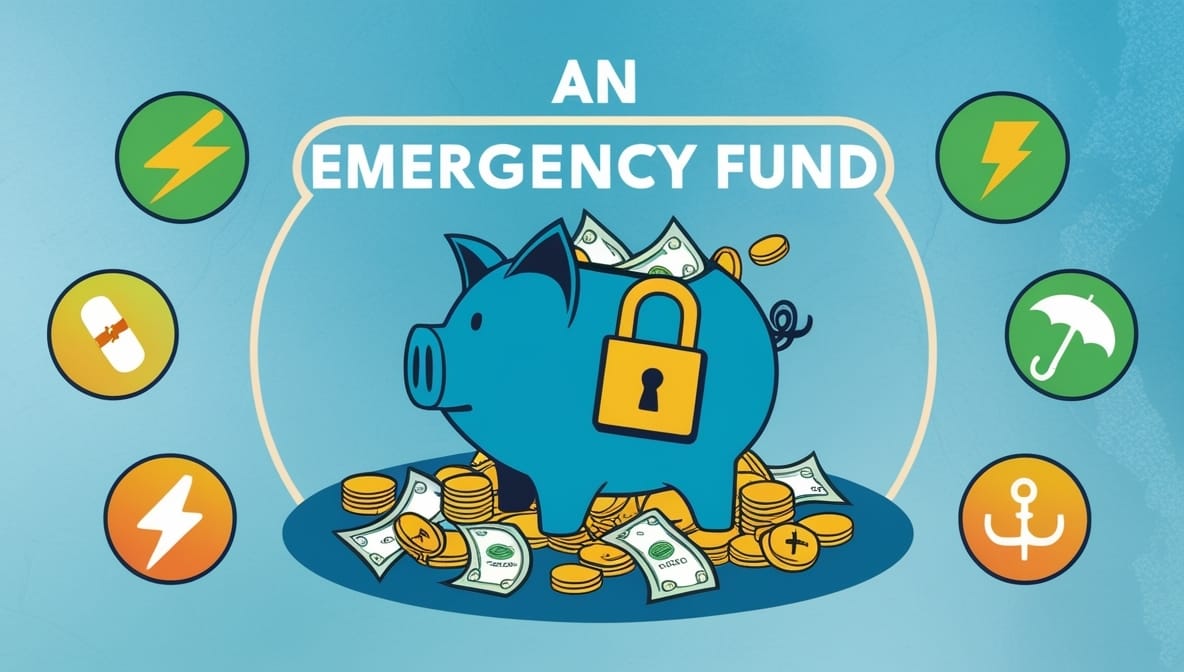
Source: Leonardo AI
Life is unpredictable, and unexpected events like job loss, changes in domestic circumstances, or health issues can arise at any time.
Having an emergency cash fund that covers 3 to 6 months of your living expenses can provide peace of mind and financial stability during such times. (I recommend 6 months)
This fund acts as a buffer against unexpected financial shocks, allowing you to avoid going into debt when emergencies occur.
In my previous article, I wrote that life is inherently chaotic, and understanding this can make navigating financial challenges easier.
Recognize that chaos is normal and that it's how you respond to it that matters
3. Contribute to Your Pension
For many, retirement may seem distant, but starting to contribute to a pension early can significantly impact your retirement savings.
If you have access to a workplace pension, take advantage of it.
Contributions to a workplace pension are tax-free for most earners upto a certain percentage, and your employer will manage the investments.
If you are not enrolled in a workplace scheme, consider a private pension plan and maintain regular monthly contributions to ensure a stable retirement fund.
If your day-to-day finances are in order, you have a solid emergency fund, and you are consistently contributing to your pension, you may be ready to start investing.
Are You Ready to Invest?

Source: Pexels
Starting with Mainstream Investments
If you're new to investing, it's wise to begin with mainstream investments. Consider funds that invest in a diversified portfolio of well-established companies.
Although stock markets can be volatile, these investments offer a balance of income and security, making them an ideal starting point for total newbies.
Investing Strategies
1. Regular Interval Savings
Committing to a regular savings plan is a wise and effective way to build your investment portfolio over time.
Set aside a fixed amount immediately after each payday, such as on a monthly basis.
For instance, if you are investing in shares, regular purchases allow you to buy more when prices are lower and fewer when prices are higher, a strategy known as dollar-cost averaging.
Additionally, it's prudent to maintain some cash as a dry powder to take advantage of market downturns.
Having a reserve of cash on hand enables you to purchase investments at discounted prices during significant down market days, potentially leading to higher long-term returns.
2. One-Off Lump Sum Investments
If you've received a substantial sum of money, such as an inheritance or a work bonus, you may be tempted to invest it all at once.
This approach is suitable if you are confident in the market's near-term growth potential and want to capitalize on early gains.
However, it's important to consider the risks. Personally, I advocate for a more cautious strategy: investing at regular intervals, especially during market downturns.
Diversification and Long-Term Strategy
1. Spreading Risk Across Different Assets
While the adage "never put all your eggs in one basket" may sound old school, it remains a timeless wisdom in the world of investing.
To achieve long-term gains, it is prudent to diversify your investments across various markets.
The point here it to mitigate potential losses and capitalize on a broader range of opportunities, setting the stage for sustained financial growth and security.
Avoid high-risk investments initially; instead, focus on building a diversified portfolio.
2. Staying Invested
Avoid the allure of get-rich-quick schemes like the plague; they are a recipe for financial disaster.
Come easy, easy go!
Instead, adopt a long-term mindset and perspective to ensure you stay in the game for the long haul.
This approach helps you weather market fluctuations, keep costs low, and enhance your overall returns.
High-Risk Investments
For seasoned investors who grasp the delicate balance between risk and reward, high-risk investments can be an enticing option.
It’s advisable to limit high-risk investments to no more than 10% of your total assets.
This allows you to explore potentially lucrative avenues while safeguarding your overall portfolio from excessive volatility.
As we wrap up, always remember that informed decisions are the cornerstone of successful investing!
I highly recommend taking just 4-5 minutes to read my previous article. It’s filled with valuable insights that will help you navigate your financial or entrepreneurial journey with confidence.
Thank you for reading.
Until next time, cheers!
The ECC Team
Reply